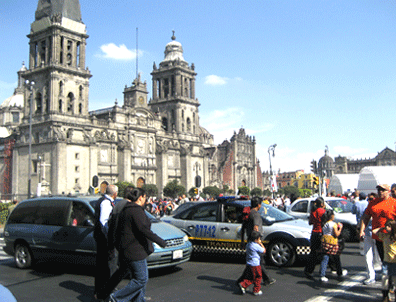
Mexico’s regional diversity makes it one of the most interesting countries to explore, though the nation’s capital, Mexico City, is not a popular tourist destination for foreigners. The city, though, is a very popular destination for Mexicans, who visit from around the country. Foreigners able to put the inflated reports of crime and congestion into context will find the city well worth visiting, especially for travelers interested in exploring Mexico’s fascinating cultural and political history. If Mexico City is the heart of the nation, the Zócalo is heart of the city and it's the natural place to start your touring.
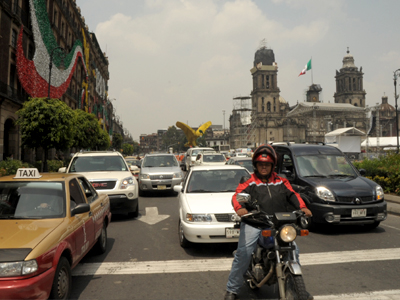
The Zócalo square, officially called Plaza de la Constitution, is the most popular destination for Mexican and foreign tourists, as well as the primary gathering spot for the city’s residents. As one of the world’s largest urban public squares, the Zócalo hosts countless festivals, political events, concerts, and national celebrations.
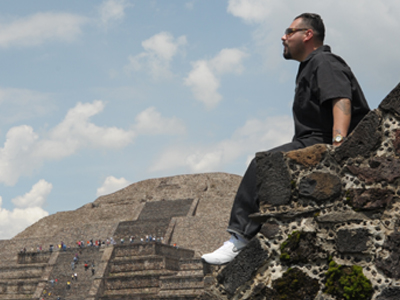
One of the largest and oldest churches in the Americas, the Metropolitan Cathedral will likely be the first feature to attract your eyes as you enter the Zócalo. Built and expanded between 1563 and 1813, the cathedral shows a mix of styles but the overwhelming impression is Baroque. Walking through the cathedral during a Sunday mass is a captivating experience regardless of one’s spiritual values. Viewing the remains of an Aztec pyramid temple beneath the cathedral is the most telling sight of the pre-Hispanic history of the city center, and of Mexico.
Parts of the pyramid and well-preserved statues can be explored at the excavation site that is next to the cathedral. It is a fascinating view of the physical and symbolic conquest of an ancient culture, which today has a renewed value and respect among the Mexican people.
The Museum of the Main Temple (Museo Templo Mayor) is world-class and has some very interesting pieces including the Coyolxauhqui offering stone and almost intact statues of the eagle warriors.
There is a lot to experience in the city’s central historical district, far more than can be enjoyed in one day. Finding a comfortable and affordable home base close to the Zócalo requires some homework. My home base for my three day stay in the historical district was the Hampton Inn & Suites, which is housed in a beautiful historic building three blocks from the Zócalo. Newly rebuilt just a year ago, the Hampton is a modern hotel wrapped in a historic façade. Though the hotel has tried to retain or recreate some of the building’s historic charm on the inside, there’s no hiding the fact that this is a new hotel. The newness was not a problem for me as I stayed at other hotels in the area where the historic charm was accompanied with antiquated plumbing and a view of a crumbling brick wall (at four star rates).
Exiting the hotel, I strolled past shops and restaurants to the Palacio Nacional (National Palace), which runs the full length of the Zócalo’s eastern side. It’s a grand building whose interior is adorned with huge murals by the famous painter Diego Rivera. The complex and colorful murals depict much of Mexico’s history and culture – studying them is a visual history lesson, as interpreted by Rivera. A walk through the beautiful and peaceful gardens behind the palace will make you forget that you’re in the city center.
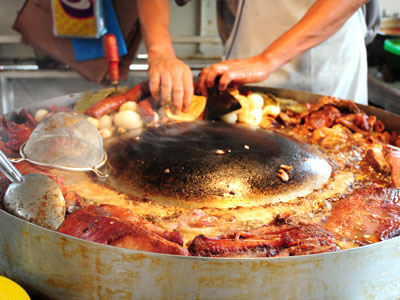
The buildings on the western side of the Zócalo are mostly commercial, with jewelry stores and a few restaurants. Not surprisingly, there are some wonderful, and even infamous, restaurants in the historic district. The food experiences of Mexico City will be the focus of a future travel article in Vision Hispana.