
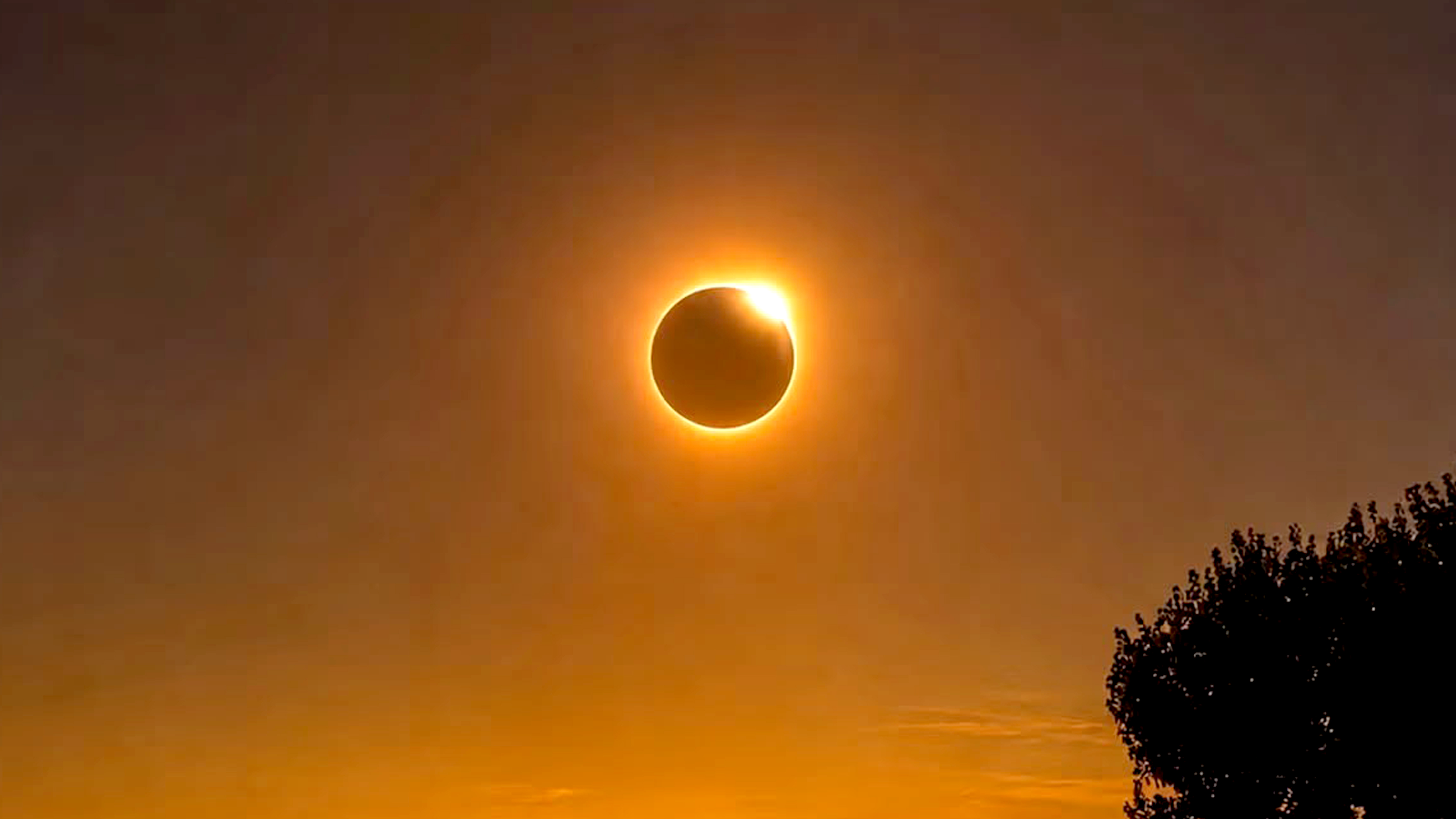
There are moments when nature reminds us, rather abruptly, that we are not running the show. I stood on the top of a cliff at Sagres, facing the immense Atlantic, waiting for the moon to move across the sun. The sea stretched towards a horizon that seemed to have no intention of ending. Above it, two celestial bodies that we experience separately were about to meet before our eyes. And then the light began to change. Not darkness exactly. Something stranger. The familiar world became unfamiliar, as though someone had quietly turned a dial and altered the settings of the planet.
Then came the cold. That surprised me most. How quickly the warmth disappeared from my skin. The temperature dropped and moisture began settling around us, almost like dew. For a few minutes, summer seemed to forget what it was supposed to be doing.
There is science behind this strange transformation. During a solar eclipse, the moon blocks some or all of the sun's radiation from reaching the Earth's surface. The ground cools, the air above it responds and temperatures can fall by several degrees. Humidity can change too. The eclipse is happening hundreds of thousands of kilometres above us, yet our skin feels it almost immediately.
But what fascinates me most is that the planet notices. And the animals notice too: birds have been observed becoming quieter or returning towards their roosts, apparently responding to the sudden loss of daylight. Insects associated with dusk may begin calling. Some animals become restless; others simply begin their evening routines, fooled by a night that has arrived several hours too early. Research has shown that during total eclipses some birds respond to those few minutes of darkness and, extraordinarily, when sunlight returns, behave as though another dawn has arrived.
Imagine that. For a few minutes, the moon passes across the sun and ancient clocks inside living creatures begin adjusting themselves. Standing on that cliff, I wondered what the birds of Sagres made of it all. Perhaps we humans were the only creatures who needed an explanation.
We had our special glasses, cameras, astronomical calculations and scientific vocabulary. The animals had light, temperature, instinct and bodies that have been listening to the Earth for millions of years, maybe their bodies understood before our minds did.
As I watched the sun and moon together, I began thinking about absence. The sun had not gone anywhere. It had not died. It had not abandoned us. Something had simply passed between us and the light. I wondered then how often we mistake that for an ending.
Grief can be an eclipse. So can illness, separation, fear, ageing, the ending of a relationship, the loss of someone we love. Something moves between us and what once warmed us, and because we can no longer feel its warmth, we believe the light itself has disappeared. But it hasn't. Standing above the Atlantic, watching that extraordinary meeting between sun and moon, I was reminded that darkness does not necessarily mean absence. Sometimes the light is exactly where it has always been, is that we simply cannot see it for a while. And then, slowly, the moon moved on. The warmth returned to my skin, the strange light lifted. Birds resumed their conversations, the world carried on, almost indecently quickly, as the world tends to do.
The light can disappear from our sight without ever having left us.
Yet something in me had shifted. For those few extraordinary minutes, standing on a cliff at the edge of Europe, I watched darkness arrive in the middle of the day and leave again. That is why eclipses have fascinated and frightened human beings for thousands of years. They show us something we spend much of our lives trying to understand: the light can disappear from our sight without ever having left us.
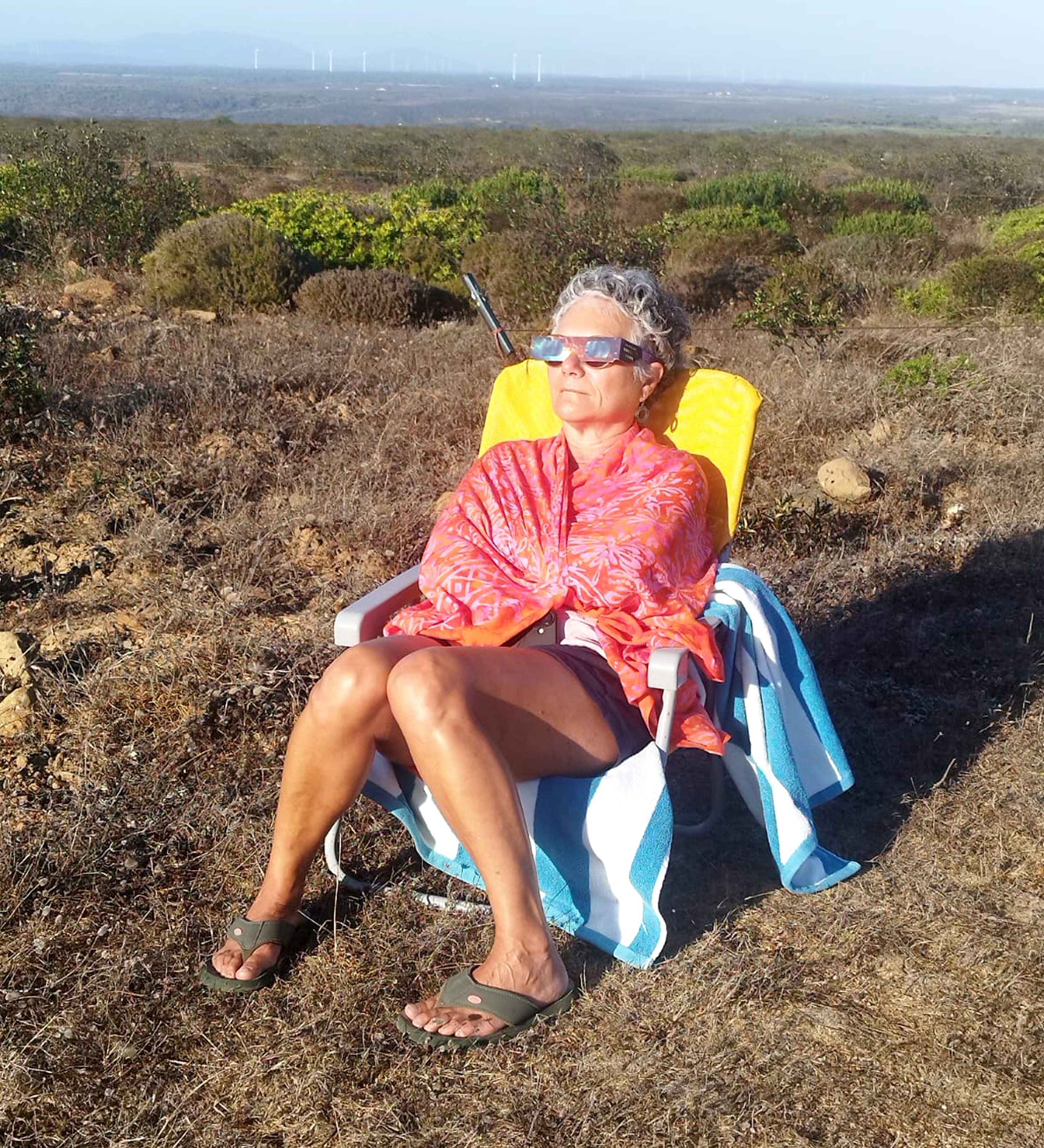
Natércia Godinho is a contributor to Visión Hispana. She writes about intentional travel and life.